
As Hormones Change, So Does Self-Care
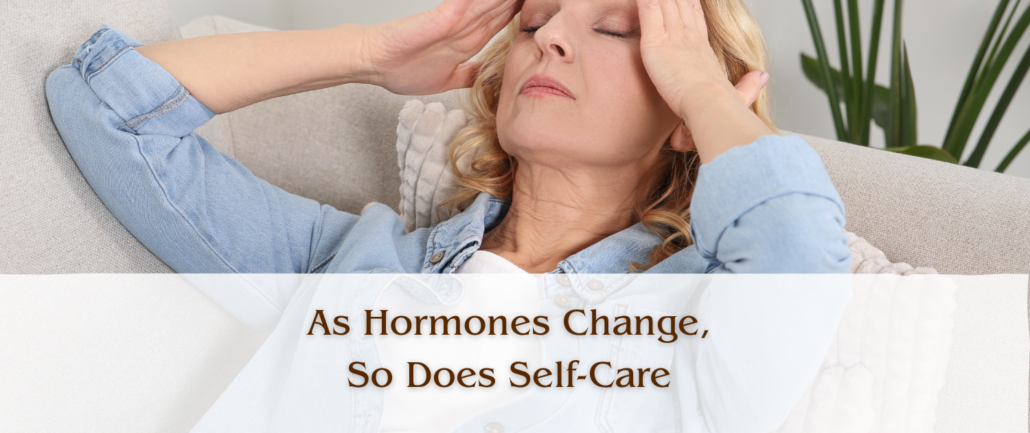
At 52 years old, going on 53, hormone health is very much at the front of my mind. One thing I’ve learned over the years: Your body changes, and the way you care for it must change too.
Hormones don’t affect only one system. They influence your skin, your energy, your mood, your sleep, and your resilience to stress. Hormones even influence how connected you feel to yourself. And as we age, ignoring that connection becomes harder and more costly.
Listen to What Your Skin Is Telling You
I’ve always had oily skin. For most of my life, that was just “how my skin was.” But now? It’s changing. It’s drier. Thirstier. It drinks water like it’s made of sand.
This is hormonal. Estrogen plays a huge role in skin hydration, elasticity, and barrier function. As those levels shift, the skin requires more support, not less.
That’s why weekly exfoliation from head to toe has become non-negotiable for me. Gentle, intentional exfoliation helps remove buildup so the skin can receive hydration. And yes, I oil my entire body and face daily. Oil isn’t the enemy; it’s information for the skin. It helps seal in moisture, support the barrier, and keep the skin communicating properly with the rest of the body.
A facial is a good way to support skin. Facials aren’t about vanity. They are about circulation, lymphatic movement, nervous system regulation, and helping the skin adapt gracefully to hormonal shifts.
Massage: Longevity Care You Can Feel Immediately
Let’s talk about massage, because this matters more as we age.
Tension is not just tight muscles. Tension is stored stress. And stress equals cortisol. Chronically elevated cortisol is incredibly unhealthy for the body, especially during midlife and beyond. It disrupts sleep, worsens inflammation, impacts insulin sensitivity, and throws other hormones further out of balance.
Getting regular massage, or honestly, even massaging yourself, is one of the simplest ways to interrupt that cycle. Touch tells the nervous system that it is safe. Safety allows the body to shift from fight-or-flight mode into repair mode.
Massage supports circulation, lymphatic flow, joint health, and emotional release. It’s not indulgent, it’s preventative. It’s longevity care.
Yoga as a Foundation, Not an Afterthought
Yoga has been foundational in my life for decades. It’s been important to me not just for physical strength and mobility, but also for mental and emotional regulation. As hormones shift, the nervous system can become more reactive. Yoga helps bring it back into balance.
Breathwork, mindful movement, and presence calm the stress response, support better sleep, and improve how the body handles change. Yoga teaches you how to be in your body, and that awareness becomes invaluable as your needs evolve.
This isn’t about pushing harder or doing more intense practices. It’s about creating space, flexibility, and steadiness both physically and mentally.
Why Routine Matters More Than Ever
Hormone health isn’t supported by one-off treatments. It’s supported by consistent, intentional care.
Facials, massage, and yoga work together to support:
- Nervous system regulation.
- Reduced cortisol and inflammation.
- Healthy circulation and detox pathways.
- Skin that adapts instead of struggles.
- A deeper connection to your body as it changes.
At this stage of life, the body is asking us to slow down, listen more closely, and respond with care – not force.
The Floating Lotus Approach
At The Floating Lotus, we don’t see facials, massage, and yoga only as separate services. They are part of a holistic system designed to support the whole person: body, mind, and spirit.
Hormone health is not just about numbers on a lab report. It’s about how you feel in your body every day. It’s about creating routines that support longevity, vitality, and peace.
Your body is incredibly intelligent. When you give it the right signals – touch, movement, hydration, rest – it responds.
And that, truly, is what holistic wellness looks like.

